Princeton Atmospheric Chemistry Experiment (PACE) Mobile Laboratory
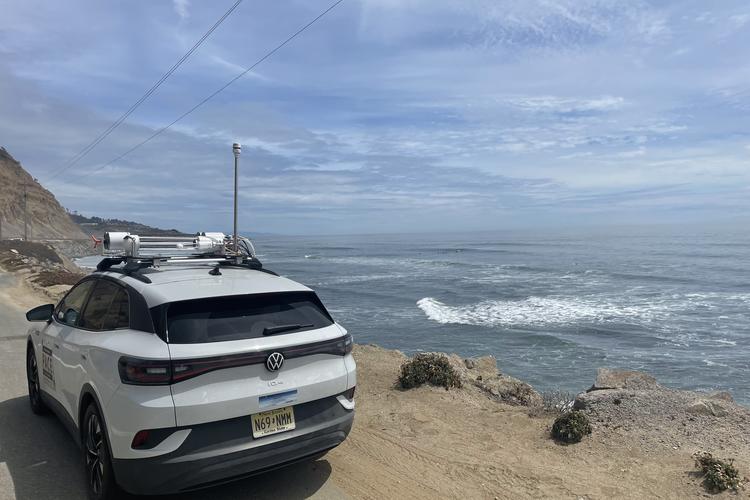
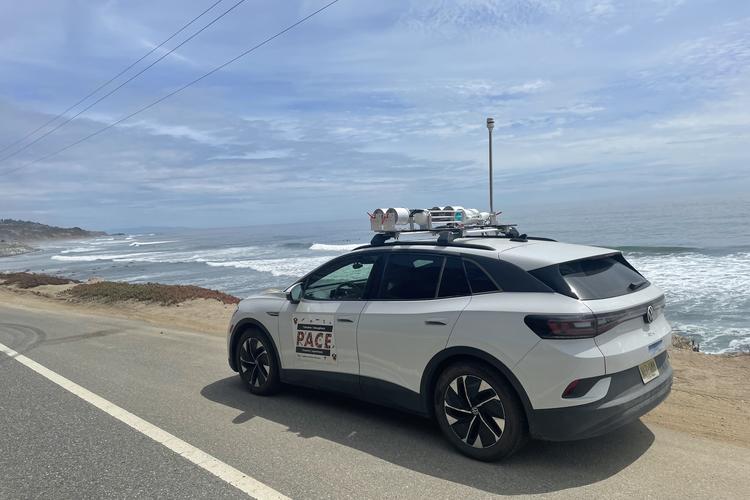
The Princeton Atmospheric Chemistry Experiment (PACE) Mobile Laboratory is an electric vehicle mobile laboratory designed to avoid self-emissions from the vehicle during measurement. By driving repeated transects downwind of targeted emission sources, PACE captures spatial and temporal variability in atmospheric composition and quantifies uncertainty in observed data.
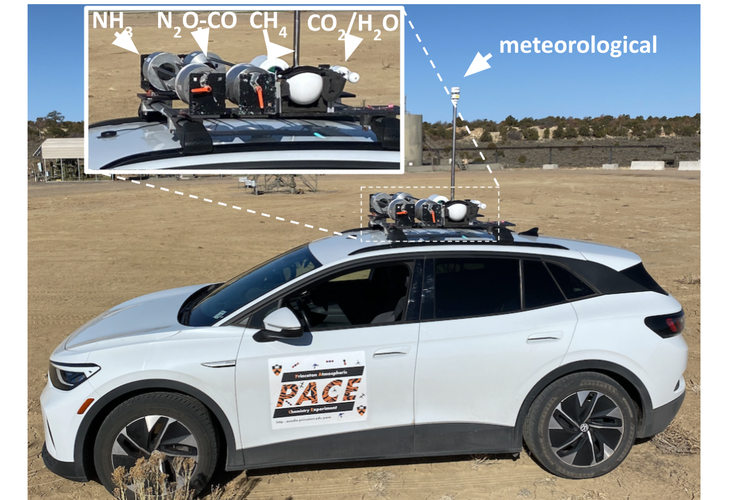
To estimate emission rates from these sources, we employ a Gaussian dispersion model with Bayesian inference using measured concentration as input. PACE is equipped with commercial and custom-built, fast-response, high-sensitivity sensors that measure a suite of key gases: carbon monoxide (CO), carbon dioxide (CO₂), methane (CH₄), nitrous oxide (N₂O), ammonia (NH₃), and water vapor (H₂O). These gases include major carbon and nitrogen species, as well as tracers of various emission sources. This comprehensive suite of measurements enables PACE to effectively fingerprint different emission sources—ranging from traffic and industry to agriculture—providing critical insights into climate change and regional air quality.